
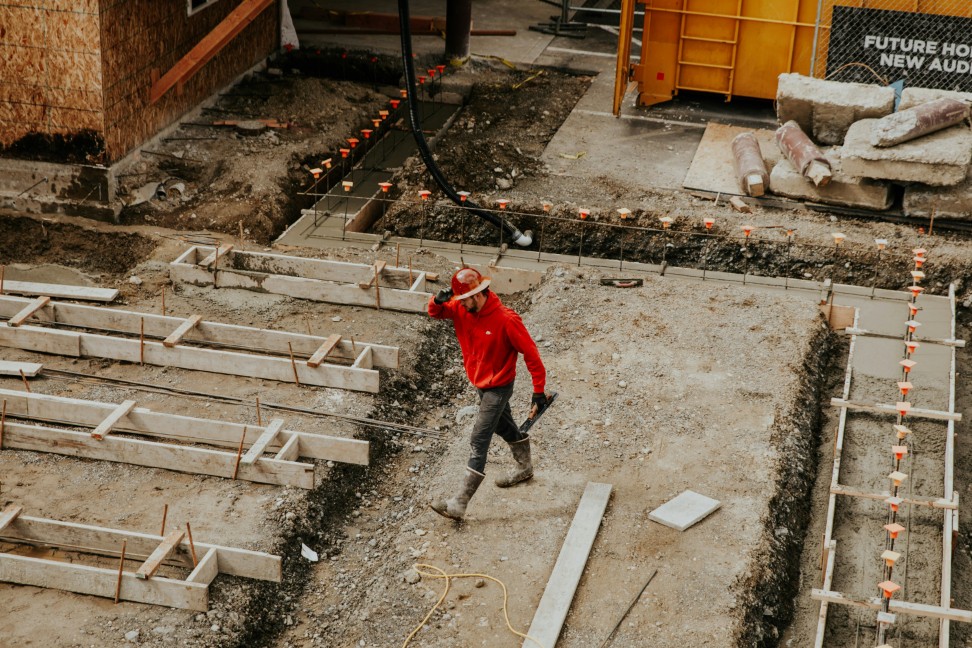
The most credible customer success stories in construction are rarely flashy. They are visible in a slab that is poured without delay, in crews that can move with confidence, and in a site that feels orderly even under pressure. When the temporary support system is well conceived, the structure above it benefits immediately. That is why conversations about diseño de cimbra para losa matter so much: they sit at the intersection of safety, timing, labor efficiency, and structural discipline.
Andamios Tlalpan has built its reputation in a practical part of the industry where results speak more clearly than slogans. As a company associated with manufacturing and rental solutions in Mexico City, it fits into the phase of a project where planning decisions become field reality. The strongest success stories around its work are not about spectacle, but about removing friction from execution.
What customer success really means on a jobsite
In construction, success is not only finishing a project. It is finishing without avoidable rework, without unsafe improvisation, and without losing control of the sequence. For slab construction in particular, the support system below the concrete deserves the same seriousness as the structural element being cast above it. If the formwork layout, shoring, access, and removal sequence are poorly coordinated, the consequences spread quickly through the rest of the schedule.
The customers who achieve the best outcomes usually focus on a few fundamentals from the beginning. Teams that need a more grounded starting point often begin by reviewing practical criteria for diseño de cimbra para losa before finalizing support layouts, stripping times, and site logistics.
- Clear load planning: every support element must make sense within the slab geometry, span, and expected site conditions.
- Accessible work zones: crews need room to assemble, inspect, adjust, and move materials without compromising safety.
- Reliable equipment condition: uniformity, maintenance, and fit matter more than many teams first assume.
- Disciplined sequencing: the order of installation and removal should serve the concrete process, not fight against it.
These are simple ideas, but they are exactly where successful jobs separate themselves from troubled ones. When temporary works are treated as a technical system rather than as an afterthought, the entire project becomes easier to manage.
Why diseño de cimbra para losa shapes the outcome
A slab is often seen as a routine construction element, especially in repetitive work. That familiarity can be misleading. Even on standard projects, the support strategy below the slab influences alignment, curing conditions, crew movement, material handling, and the pace of later trades. Good diseño de cimbra para losa does not only hold weight; it creates predictability.
On compact urban sites, this becomes especially important. Mexico City projects frequently face narrow access points, neighboring structures, irregular site boundaries, and little tolerance for disorder. Under those conditions, the design of temporary support is not merely a technical check. It becomes part of site management itself.
This is one reason companies value providers that understand both product and field application. Andamios Tlalpan operates in a space where manufacturing quality and rental readiness meet real site constraints. For contractors, that combination can reduce the gap between what looks adequate on paper and what actually works in the field.
The practical benefits are easy to recognize when they are present. Crews assemble with fewer interruptions. Supervisors spend less time correcting preventable issues. Concrete operations proceed with more confidence. Subsequent trades inherit a cleaner workflow. None of that happens by accident. It is the result of temporary works being planned with the same seriousness as permanent construction.
Common success patterns in residential and commercial work
Although every project has its own demands, successful outcomes tend to follow recognizable patterns. In residential slab work, the challenge is often space. In commercial work, the challenge is usually coordination. In both cases, better support planning creates the margin that teams need.
Residential projects: tight sites, high need for control
On houses, low-rise buildings, and renovation-related slab work, access is often limited and storage is minimal. The jobs that go well are usually those where the contractor avoids overloading the site with unnecessary material and uses support elements that can be handled, placed, and adjusted with clarity. Success here comes from order. When the cimbra and andamios solution fits the scale of the site, crews can work more cleanly and supervisors can inspect more effectively.
Another recurring feature of successful residential projects is timing discipline. Small jobs are frequently assumed to be simple, yet they are the most vulnerable to informal decision-making. A well-planned slab support arrangement protects against that tendency because it gives the team a defined sequence instead of leaving too much to improvisation.
Commercial projects: coordination is everything
In commercial construction, the success story looks different. The issue is not only whether the slab can be supported correctly, but whether the support system aligns with the larger program. Mechanical work, circulation routes, deliveries, inspections, and follow-on trades all compete for space and time. Here, temporary works must help the schedule rather than block it.
- Plan the slab cycle early: define access, support distribution, and removal criteria before pressure builds on site.
- Standardize where possible: consistent components simplify assembly, supervision, and replacement.
- Coordinate logistics: delivery timing matters almost as much as the equipment itself.
- Inspect continuously: temporary systems deserve recurring review, not a single approval moment.
These are the kinds of patterns behind the most durable customer success stories: not dramatic rescues, but smarter preparation that keeps the project from drifting into avoidable complexity.
How Andamios Tlalpan supports smoother execution
The value of a specialist supplier is often underestimated until a project faces pressure. At that point, the difference between generic availability and dependable support becomes obvious. For many builders in the capital, Fabricantes de Andamios | Andamios Renta en CDMX | Andamios Tlalpan is relevant because it sits close to the practical needs of execution: equipment quality, timely access to rentable systems, and familiarity with what site teams actually require.
That support is most useful when it appears before problems begin. Contractors tend to benefit most when they evaluate their needs with a clear view of slab geometry, crew workflow, access constraints, and intended sequence. The provider then becomes part of risk reduction, not simply a late-stage source of materials.
| Project need | What good support looks like | Why it matters |
|---|---|---|
| Safe temporary access | Stable, compatible andamio components in sound condition | Improves movement, inspection, and daily control |
| Reliable slab support | Formwork and shoring planned around the actual pour sequence | Reduces improvisation and protects schedule discipline |
| Efficient site use | Equipment quantity matched to the project scale | Avoids congestion on tight urban sites |
| Operational continuity | Rental and supply handled with consistency | Helps teams maintain momentum between stages |
That table may look straightforward, but it captures why some projects feel controlled from the start while others become reactive. Customer success in this context is built on dependable basics, delivered well.
Conclusion: the best results begin with better diseño de cimbra para losa
Strong construction outcomes rarely come from a single dramatic decision. More often, they come from a chain of sound choices made early and executed consistently. Among those choices, diseño de cimbra para losa remains one of the most influential because it affects safety, workflow, inspection, and schedule at the same time.
The success stories associated with Andamios Tlalpan make sense for exactly that reason. They reflect a practical kind of value: helping projects stay buildable, organized, and reliable under real site conditions. When contractors treat temporary works as part of the project’s core engineering rather than as a secondary concern, they create the conditions for cleaner pours, steadier crews, and stronger results from start to finish.
